
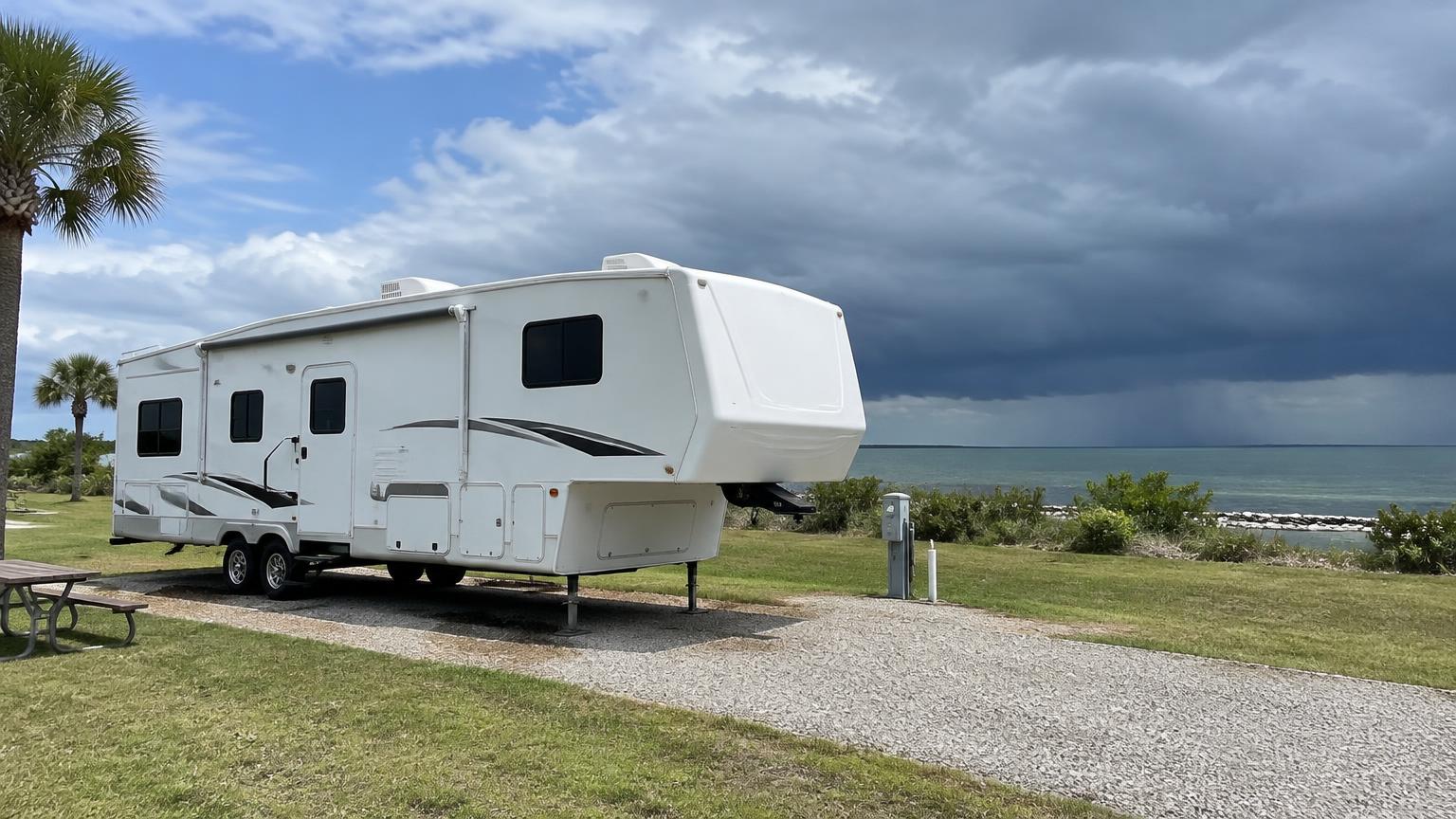
Atlantic hurricane season runs from June 1 to November 30, and on the Alabama Gulf Coast every RV owner should have a plan. An RV can be your evacuation vehicle, or it can be the thing you have to leave behind. Either way, the decisions are easier when you make them before a storm has a name.
Safety first: an RV is not a place to ride out a hurricane or tropical storm. Follow Baldwin County and local evacuation orders, and get people and pets to a safe structure.
Before the season starts
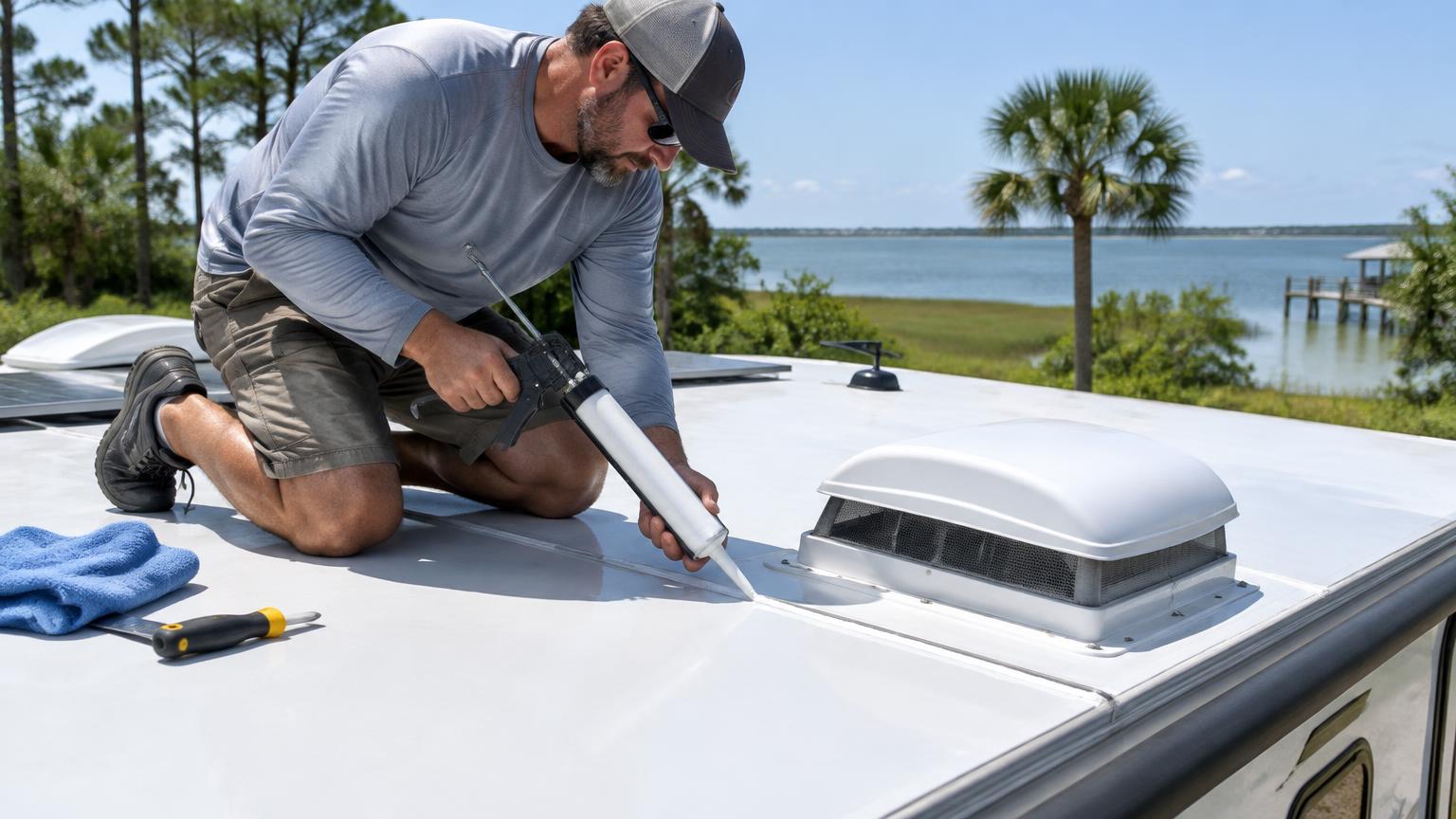
Know your RV's weak spots. Roof seams, the seals around vents, skylights and the A/C, slide-out seals and window seals are where wind-driven rain gets in. Have the roof and seals checked in late spring so small cracks get fixed before storm season, not after.
Get the paperwork ready. Take photos and a short video of the RV inside and out, including the roof if you can do it safely, and keep copies of your registration and insurance in a waterproof bag or in the cloud. Call your insurance agent and ask what your policy covers for wind and flood.
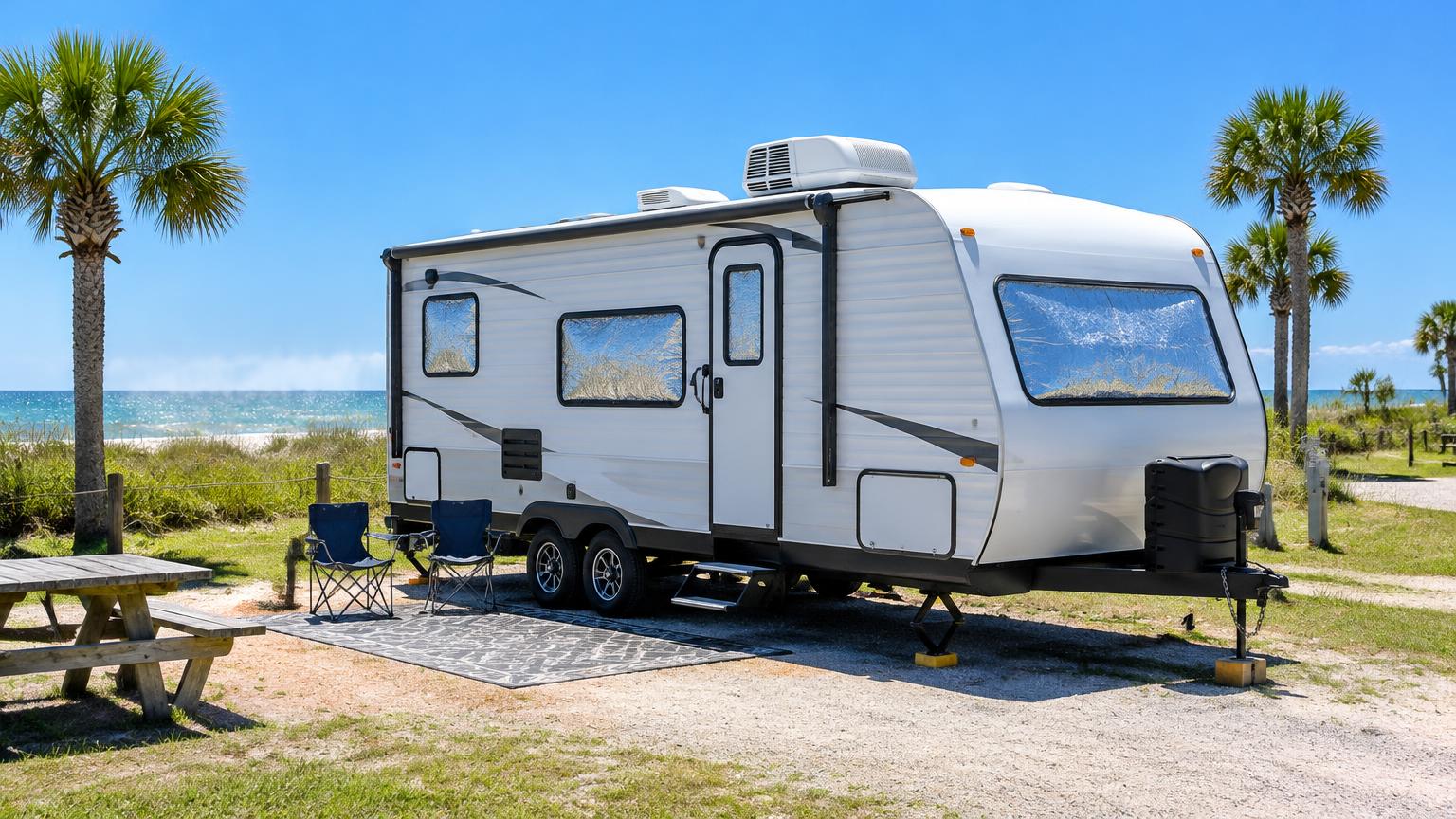
Decide: go or stay parked. If you'll use the RV to evacuate, it needs to be ready to roll on short notice. If it will stay, know where it will be safest.
If the RV is your evacuation vehicle
Do this early in the season, not during the warning:
- Tires: check pressure and look for cracking and age.
- Batteries: make sure they hold a charge.
- Brakes and lights on the RV and tow vehicle.
- Generator: run it under load, so you know it will start.
- Propane: full tanks, and check that the system has no leaks.
- Fresh water: keep some on board.
- Keep a "go" bin with meds, documents, chargers and food.
Leave early. High winds on bridges and open roads are dangerous for high-profile vehicles like RVs, and traffic gets heavy fast.
If the RV has to stay
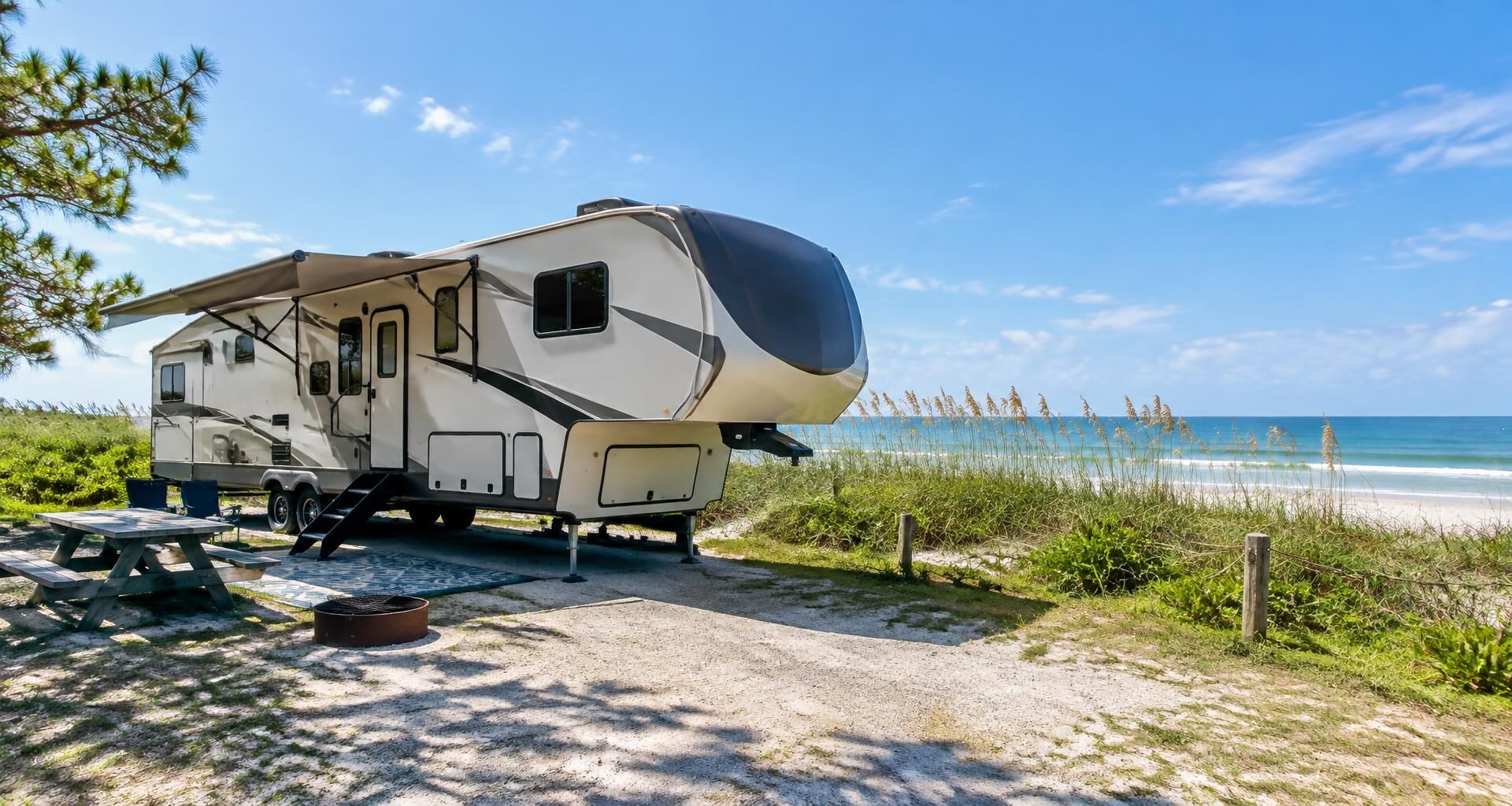
- Move it away from trees, power lines and anything that can fall or fly.
- Bring slides in, roll up and lock the awning, and close every vent and window.
- Turn off propane at the tanks and disconnect shore power.
- Take valuables and important items out.
- If it's in a storage lot, ask the lot about their storm procedures ahead of time.
- If your area floods, higher ground matters more than anything else.
After the storm
Only go back when officials say it's safe. Then, before you plug in or move the RV:
- 1Walk around it. Look for damage to the roof, vents, A/C shroud, awning, windows and slides. Look underneath for debris and anything hanging.
- 2Check for water inside. Soft spots in the floor or walls, stains on the ceiling, a musty smell or wet carpet all mean water got in.
- 3Don't plug in if it was in floodwater. Water in the electrical system, outlets or under-floor wiring can be dangerous. Have it inspected first.
- 4Check propane. If you smell gas, leave the tanks off and get it checked.
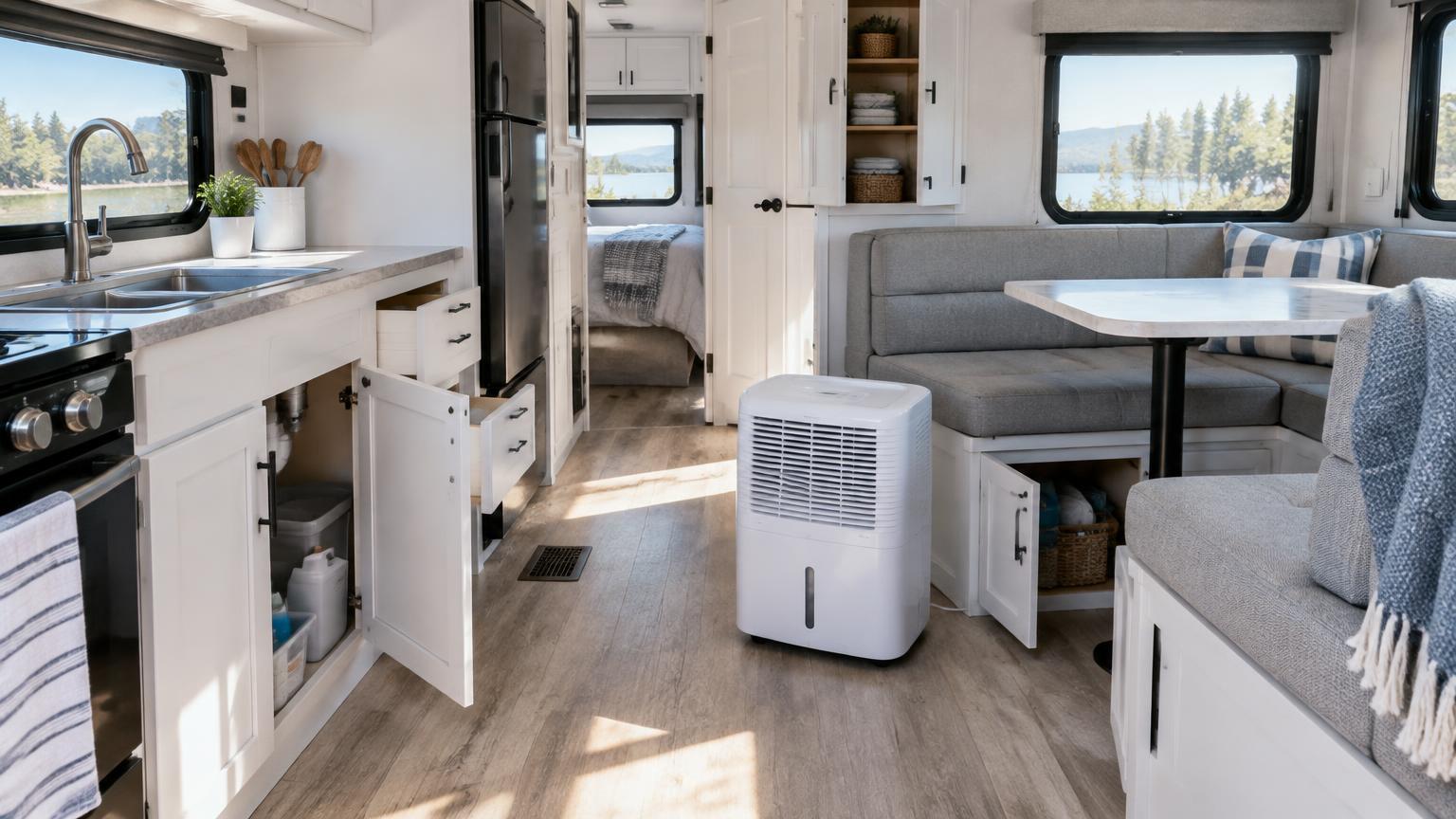
- 5Photograph everything for your insurance before cleanup, then dry the interior out as fast as you can to limit mold.
Why a post-storm check is worth it
Storm damage on an RV isn't always obvious. A small lifted seam or a cracked vent cover can let water in slowly for weeks, and by the time you see a stain, the wood behind it may already be soft. A mobile tech can check the roof, seals, electrical and propane on site, so you don't have to drive a possibly damaged rig anywhere.
Mobile Madness RV Repair works across Baldwin County, from Fort Morgan and Orange Beach to Robertsdale and Bay Minette. Call (855) 382-5314 to set up a pre-season check or a post-storm look.
Questions about this
The Atlantic hurricane season officially runs from June 1 to November 30.